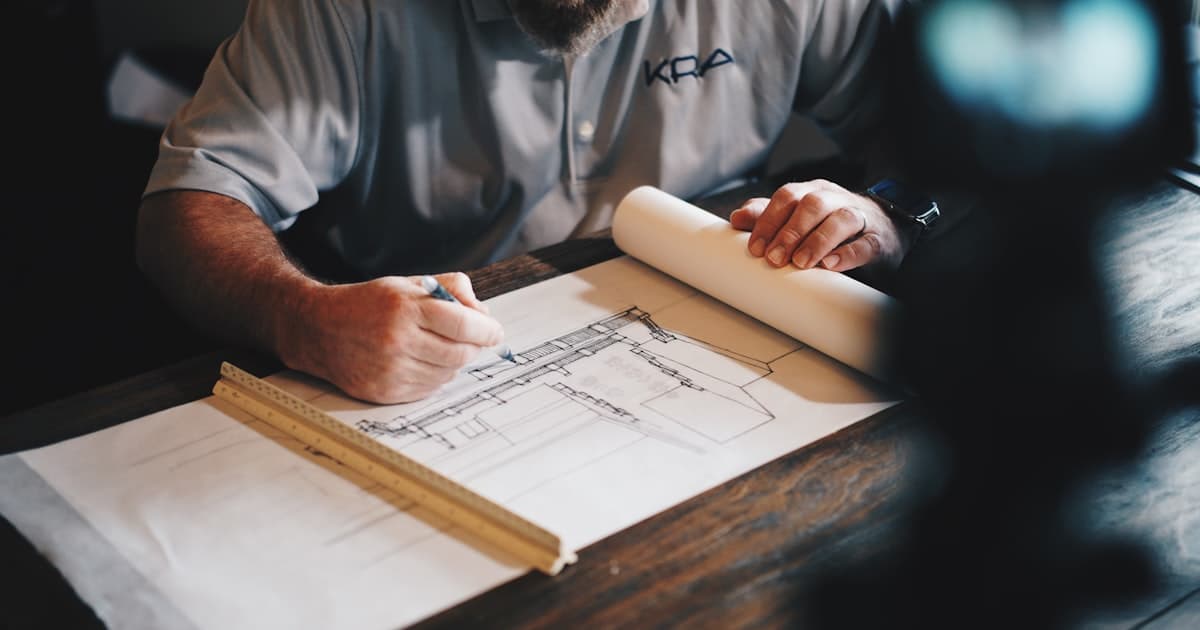

When my wife and I started seriously thinking about designing our own home, I thought I was prepared. I'd watched hundreds of architecture videos. I'd studied floor plans until I could read them like a second language. I'd developed opinions about materiality, orientation, spatial sequencing, and indoor-outdoor connections. I had notebooks full of precedents and a design brief that ran to twelve pages.
I was not prepared.
The gap between studying architecture and doing architecture is massive. Not because the knowledge is wrong — everything I'd learned was accurate and useful. But because applying knowledge to your own life, your own site, your own budget, and your own family dynamics is a fundamentally different challenge than analyzing someone else's project from the comfort of your couch.
Here's what I actually learned — the lessons that made their way into Foundations of Architecture because I realized every homeowner needs to hear them before they start.
Lesson 1: You Don't Know How You Live Until You Document It
I thought I knew how I lived. I'm home most days, working from my office. My wife and I cook dinner together. We like natural light. We want a connection to the outdoors. Easy, right?
Wrong. When I actually documented a full week of movement patterns — where I went, when, in what sequence, what frustrated me, what felt effortless — I discovered things I'd never consciously noticed. I realized I walk to the kitchen for water twelve times a day, so the distance between my office and the kitchen is a genuine design parameter. I realized I avoid the living room after 3 PM because the western sun makes it unbearable. I realized our entryway is chaos every morning because there's no dedicated place for keys, bags, and shoes.
These observations became specific design requirements: office adjacent to kitchen. Living room oriented away from western exposure. Entry with built-in storage and a clear drop zone. None of these appeared on my original wish list because I hadn't observed myself closely enough.
This lesson is now Module 2 of FOA — the self-documentation process that turns unconscious habits into conscious design inputs.
Lesson 2: Your Budget Is Real, and Ignoring It Is Expensive
Here's the painful truth: the house I designed in my head cost about twice what we could afford. The double-height living room, the rammed earth feature wall, the floor-to-ceiling sliding glass, the courtyard garden — individually, each element was reasonable. Together, they were financially devastating.
The hardest part of home design isn't dreaming — it's editing. Deciding that the rammed earth wall is more important than the double-height ceiling. That the sliding glass is more important than the courtyard garden. That you'd rather have extraordinary materials in a smaller footprint than ordinary materials in a larger one.
This editing process is brutal, and it's where the architect-builder relationship becomes invaluable. Your architect helps you understand the design implications of each cut. Your builder helps you understand the cost implications. Together, they help you make informed tradeoffs instead of arbitrary sacrifices.
I designed the budget-editing framework into the FOA course because nobody warned me how emotionally difficult this phase is. When you've spent months imagining your dream home, cutting features feels like losing something real. But the homes that are actually built — and built well — are the ones where the homeowner made clear-eyed decisions about priorities.
Lesson 3: The Site Talks. Listen.
We visited our building site at least twenty times before we started designing. And every visit taught us something new. The morning visit revealed that the eastern boundary gets beautiful early light but the neighbor's two-story extension blocks it by 9 AM. The afternoon visit revealed that the western exposure is relentless — no shade, no screening, just blazing afternoon sun that would cook any room facing that direction.
The windy weekend visit revealed that the northwest corridor funnels wind across the site like a natural wind tunnel. The rainy visit showed us where water pools and where it drains. The summer visit versus the winter visit showed dramatically different sun angles.
Your site is speaking to you. The question is whether you're listening — and whether you're listening at enough different times and conditions to understand what it's actually saying.
This lesson shaped the site analysis module in FOA. I don't just teach the theory of solar orientation and wind patterns. I teach the practice of visiting your site repeatedly, at different times and seasons, and documenting what you observe. Because no survey or Google Earth image can replace standing on your land and feeling the conditions that will shape your home.
Lesson 4: Your Architect Is Not a Mind Reader
My twelve-page brief was thorough. It covered room requirements, spatial relationships, material preferences, light strategies, and lifestyle patterns. I was proud of it.
But it still wasn't enough. Because a brief, no matter how detailed, can't capture every nuance of how you want to feel in a space. I'd write "warm living room with natural light" and my architect would interpret that differently than I imagined it. Not wrong — just different. Their version of warm was timber tones and fireplace. My version of warm was afternoon sun through high windows and a low, intimate ceiling.
The lesson: over-communicate. Show your architect precedent images that illustrate the qualities you're after. Describe not just what you want, but why. Give them the story behind the requirement. "I want a low ceiling in the living room because the most comfortable room I've ever been in was my grandmother's den, which had a seven-foot ceiling and made you feel held." That story gives your architect more to work with than "low ceiling, please."
Lesson 5: The Builder Is Your Co-Designer
I initially thought of the builder as the executor — someone who takes the architect's drawings and constructs the building. I was wrong. Our builder was a co-designer.
The builder flagged a structural issue with the cantilevered deck that would have required a steel beam costing $15,000. They suggested a modified design — shifting the deck support column 18 inches — that achieved 90% of the same visual effect for $2,000. That suggestion saved us $13,000 and improved the design.
The builder recommended a different timber species for the exterior cladding — one that was locally sourced, less expensive, and performed better in our climate than the architect's specification. The builder identified a floor-level detail at the indoor-outdoor threshold that would have leaked within two years and proposed a solution the architect incorporated into the final drawings.
These contributions aren't construction — they're design. Your builder brings practical knowledge that complements your architect's design knowledge, and the best outcomes happen when both professionals are respected as creative contributors.
This lesson is woven throughout FOA, particularly in the modules on structure, materials, and the design-to-construction transition. I want every homeowner who takes the course to understand that their builder isn't just a contractor — they're a critical partner in the design process.
Lesson 6: Patience Is the Hardest Skill
Designing a home takes longer than you expect. Much longer. Our design process — from first meeting with the architect to approved construction documents — took fourteen months. That's fourteen months of meetings, iterations, cost reviews, consultant coordination, permit applications, and design refinements.
During that time, I wanted to rush. I wanted to skip the second round of revisions. I wanted to approve the design development drawings without waiting for the structural engineer's review. I wanted to be building, not designing.
Every time I wanted to rush, our architect reminded me: changes on paper are free. Changes in concrete cost thousands. The design process isn't delaying your home — it's protecting your home from the mistakes that haste produces.
This lesson is maybe the most important one in FOA, and it's the simplest: the design process takes time, and that time is an investment, not a waste. Every week you spend refining the design saves you a month of construction-phase headaches. Trust the process.
Why I Put These Lessons Into a Course
I built Foundations of Architecture because I didn't want other homeowners to learn these lessons the hard way. Some of them cost us money. Some cost us time. All of them could have been learned in advance, if the right educational resource had existed.
The course isn't about theory — it's about the practical reality of designing a home. The self-documentation process. The budget editing framework. The site analysis methodology. The communication strategies for working with architects and builders. The patience required to do the process right.
106 lessons distilled from lived experience, not just academic study. That's the difference.
Foundations of Architecture is a GAS Studio venture that teaches homeowners how to think like an architect — so they can design homes worth building.
This entry is part of our Purpose & Impact series, where we explore the deeper reasons behind the ventures we build.
Related Venture
Foundations of Architecture
Design your dream home.